Remember CRMs?
The CRM became a world unto itself. Clunky, expensive, locked-in. The fix isn't a better CRM, it's owning the data underneath.
A CRM is simple. The people you deal with, the companies they sit in, every exchange in between. A database with a screen on top. Used well, it’s how a business remembers every relationship it has.
The catch is it’s only as good as whether people actually use it.
Salesforce popularized this in the early 2000s, and then it became a world unto itself. Clunky. Expensive. Tie-ins everywhere. You needed Salesforce engineers just to set the thing up. And here’s the part nobody admits: half the time, the people inside the company never really used it.
Worse, your data lived inside it. Want to get it out, or do something real with it? You’re on your knees to the vendor, wiring integrations through their API to reach your own information.
That was the old web. The interface was the hard part, so the interface was the product.
Not anymore. A screen is fast to build now, in the right hands. The value was never the screen. It’s the substrate underneath, the actual information. No reason to lock that behind someone else’s app and pay rent on it forever.
So we built it the other way around.
We looked at Salesforce and passed. Too much setup, more time spent standing the tool up than using it. So we built our own, first in Airtable, then Notion. Better, and ours. But still boxed in: even there, in the AI era, you have to pipe the data out before a model can read it. More plumbing for something that shouldn’t need any.
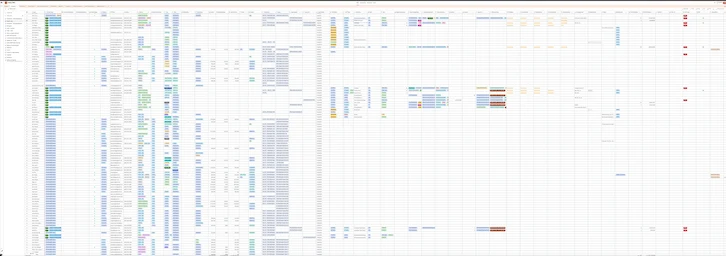
Why build the roof first?
So we went to the ground. The data layer first, native and structured and ours. Any AI model reads it directly, no export, no pipe, no integration. A new contact, a new kind of record, a new connection is a small change, not an engineering project.
And once the substrate is right, the rest is easy. You bolt on exactly what you need, when you need it. No tie-ins. No Salesforce engineer on retainer. No paying by the seat to wire an API into some app you rent. You build what your business actually needs, not a 75% approximation that bills you every month and locks you in.
Do this with real structure and it stops being a CRM at all. It becomes part of the company brain. The screen comes last, and it bends to the data, not the other way around.
The CRM was never the point. The data was.
That’s what we built, after years of doing it the other way.
The system behind it: Purpose-built CRM.